Pearl Cufflinks sit at the intersection of fine jewelry, men’s accessories, and formalwear. Their value depends on more than visual polish. Pearl quality, metal composition, setting precision, and long-term wear resistance all influence a buyer’s decision. The GIA explains that pearl value is commonly assessed through factors such as luster, surface quality, shape, color, and nacre quality. These details matter when a cufflink must remain elegant under office lighting, wedding photography, and repeated fastening.
The global luxury market remains substantial, although demand is becoming more selective. Bain & Company and Altagamma’s Luxury Goods Worldwide Market Study 2024 reported continued pressure on aspirational consumers and stronger focus on product value. That shift makes supplier verification essential. CIBJO’s Pearl Blue Book also provides professional terminology for pearl treatments, identification, and disclosure. Buyers should therefore examine pearl origin, treatment records, alloy specifications, plating thickness, sample consistency, minimum order quantities, and after-sales support. Small details matter.
This guide introduces China’s top 10 Pearl Cufflinks manufacturers for global buyers. The selection should not rely on catalog photographs alone. Factory experience, export capability, documented quality systems, and communication discipline deserve equal attention. Industry databases, customs data, and supplier audits can support the comparison, but they cannot replace physical samples. That is an uncomfortable truth. A polished website may hide uneven finishing, loose backs, or inconsistent pearl matching. Buyers should test several production units before approving a large order, while checking applicable import, labeling, and material requirements in their destination markets.
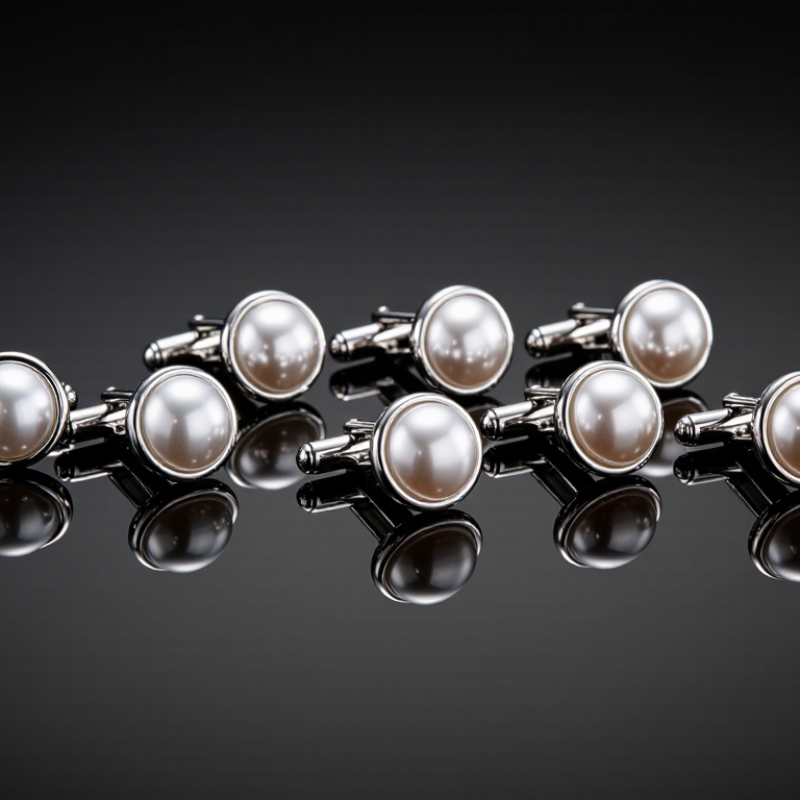
China’s pearl cufflink industry is structured as a flexible supply chain, not a single factory model. Freshwater pearl farms provide most raw materials. The China Pearl Association has reported that freshwater pearls represent over 90% of China’s cultured pearl output. Production is concentrated around major cultivation areas in Zhejiang, Jiangsu, and Hunan.
Processing is divided into clear stages. Local workshops wash, drill, sort, and match pearls. Specialized metal factories produce silver, stainless steel, or plated settings. OEM and ODM manufacturers then assemble cufflinks, polish surfaces, and complete packaging. UN Comtrade places worked pearls and related articles under HS 7116, but this code does not isolate cufflinks. That limitation makes supplier comparisons less precise. It is an overlooked issue.
Export traders and inspection agencies often connect factories with overseas buyers. Larger suppliers usually manage design, sourcing, assembly, and quality control internally. Smaller workshops may outsource plating or stone setting. This structure can reduce costs, but it creates more checkpoints. The International Trade Centre recommends checking product specifications, material declarations, and supplier consistency during cross-border sourcing.
Tips: Request pearl-matching photos under neutral light. Confirm pearl diameter, luster grade, backing material, plating thickness, and clasp performance. Ask which processes are outsourced. A sample may look excellent, while later batches vary slightly. That risk deserves written tolerances and pre-shipment inspection.
Selecting China’s top pearl cufflink manufacturers requires more than comparing catalog photos. Global buyers should inspect pearl quality, metal composition, production control, and export reliability. Request physical samples before placing a large order. Examine each pearl under natural light for luster, surface marks, matching, and secure mounting. Perfect symmetry is uncommon, so define acceptable variation in writing.
Ask manufacturers for material reports covering pearl type, metal purity, plating thickness, and allergy-conscious finishes. Confirm whether testing comes from an independent laboratory. Review factory photographs, inspection records, and sample approval procedures. A dependable supplier should explain its quality checkpoints clearly. Check production capacity, minimum order quantities, lead times, packaging options, and response speed. Communication matters more than polished promises. I have learned that a beautiful prototype can still reveal weak clasps during repeated use.
Tips: Compare at least three samples from each shortlisted manufacturer. Test the hinge, post, and fastening mechanism several times. Request a pre-shipment inspection with measurable standards. Confirm carton labels, invoices, and shipping documents before production. Keep approved samples for future comparison. Small details become expensive later.
Pricing should be judged beside consistency, not alone. An unusually low quote may reflect thinner plating, uneven pearls, or limited inspection. Ask how rejected pieces are handled and whether replacement terms are documented. Manufacturers with experienced technicians, traceable materials, and stable production records usually offer stronger long-term value, though no supplier is flawless. Leave room for review.
The chart presents a practical 100-point evaluation framework for comparing pearl cufflink manufacturers. Product quality and pearl authenticity receive the highest weighting, followed by customization capability, export compliance, production reliability, and buyer service.
China’s pearl cufflink sector combines cultured pearl sourcing, precision metalwork, and export-focused customization.
Grand View Research valued the global jewelry market at approximately US$353 billion in 2023. This scale supports specialized suppliers serving formalwear, corporate gifting, and private-label orders.
The ten manufacturers profiled here show different strengths.
One focuses on freshwater pearls from Jiangsu and Zhejiang. Another uses sterling silver with rhodium plating for brighter surfaces. A Guangdong workshop specializes in gold-tone brass and small production runs. A Shenzhen manufacturer offers laser engraving and strict logo placement control. A Zhejiang factory emphasizes large-volume assembly.
A Shanghai-based supplier develops antique finishes and darker settings. One Dongguan team combines hand polishing with automated inspection. Another focuses on baroque pearls, where shape variation becomes part of the design. A Fujian workshop serves gift-box projects with custom velvet interiors. The final profile highlights sample development, useful for buyers testing new collections.
All ten should provide material declarations, plating specifications, and pre-shipment photographs.
Intertek and SGS reports commonly stress traceability, coating thickness, nickel release, and dimensional consistency in jewelry supply chains.
These checks matter because a cufflink can look excellent yet fail after repeated contact with shirts and moisture.
The cultured pearl market is projected to expand steadily, according to Allied Market Research, but forecast figures vary by definition and region. That uncertainty deserves attention.
Buyers should compare physical samples, not only catalogs, prices, or polished factory claims.
China’s top ten pearl cufflink manufacturers should be judged by materials, not catalog images alone. Ask for pearl grading details, surface inspection records, and metal composition reports. Freshwater pearls offer varied shapes and soft luster. Akoya-style pearls provide a more uniform appearance. Sterling silver, brass, and gold-plated alloys create different price points. The backing should feel firm, with smooth edges and a reliable hinge. Small details matter.
Tips: Request physical samples before placing a large order. Check pearl matching under natural light. Measure the cufflink post and closure. Ask whether plating thickness is tested. Review defect tolerances in writing. Do not trust perfect photos alone.
Craftsmanship appears in polish quality, setting alignment, and repeated finishing. Experienced workshops can explain how pearls are drilled, matched, and secured. They should also support custom shapes, engraved surfaces, private packaging, and color adjustments. Clear drawings reduce production mistakes. A sample approval stage is essential, though it may slow delivery slightly. That delay is often useful. I have seen attractive prototypes fail when the hinge was tested repeatedly. Quality standards should include dimensional checks, coating adhesion tests, clasp inspections, and final appearance grading. Reliable suppliers keep batch records and communicate deviations honestly. Still, no inspection system is flawless. Buyers should define acceptable imperfections, especially for natural pearls, because slight variations are normal.
Global buyers comparing pearl cufflink manufacturers should examine more than catalog photographs. Request a factory profile, production capacity, sample policy, and recent quality records. Check pearl diameter, luster, surface marks, nacre thickness, metal purity, and backing security. A written specification prevents costly misunderstandings. The Gemological Institute of America explains that pearl value depends strongly on luster, surface quality, shape, color, and size. Use these criteria during sample approval. Do not trust “premium” as a technical grade.
Order planning needs measurable supplier comparisons. Ask for a proforma invoice showing unit price, tooling fees, packaging, lead time, payment stages, and shipping terms. The World Bank’s 2023 Logistics Performance Index evaluates customs, infrastructure, international shipments, logistics competence, tracking, and timeliness. Use those six areas when reviewing delivery capability. The DHL Trade Growth Atlas 2024 projects global trade growth of about 2.5% annually through 2029. Delays still happen, especially during peak seasons. Build a buffer of seven to fourteen days. That may feel excessive, but rushed jewelry orders create avoidable defects.
Tips: Compare three samples under daylight and indoor light. Photograph each cufflink beside a millimeter ruler. Confirm pearl matching tolerance in writing. Request a pre-shipment inspection with random cartons opened. Keep purchase terms, inspection results, and material declarations together. One weakness remains: supplier websites rarely prove factory performance. A video call helps, but it is not independent verification. For larger orders, use a qualified third-party inspection company and release the balance only after documented approval.
| Rank | Supplier Code | Core Product Focus | Pearl Options | Common Metal Options | Typical MOQ | Typical Sample Lead Time | Typical Bulk Lead Time | Customization Capability | Quality Documentation | Export Order Considerations |
|---|---|---|---|---|---|---|---|---|---|---|
| 1 | Supplier 01 | Classic formal cufflinks for private-label and corporate gifting programs | Freshwater 6–8 mm | 925 sterling silver, stainless steel, gold-plated finishes | 50–100 pairs | 7–12 working days | 25–35 working days | Logo engraving, packaging, pearl color selection, custom mold | Material specification, pre-shipment inspection, plating thickness report on request | Confirm nickel, lead and cadmium requirements for destination market |
| 2 | Supplier 02 | Premium pearl and precious-metal cufflinks for luxury retail channels | Akoya 7–8.5 mm | 14K gold, 18K gold, platinum by quotation | 20–50 pairs | 10–15 working days | 30–45 working days | Custom settings, stone combinations, presentation boxes and certificates | Metal assay documentation and pearl grading details should accompany quotation | Verify karat markings, assay rules and import duties before ordering |
| 3 | Supplier 03 | High-volume promotional and uniform-accessory cufflinks | Freshwater 5–7 mm | Stainless steel, brass with plated finish, 925 silver upgrade | 100–300 pairs | 5–10 working days | 20–30 working days | Laser logo, color matching, bulk packaging and barcode labeling | Pre-production sample, dimensional inspection and quantity check | Suitable for buyers prioritizing repeatability and unit-cost control |
| 4 | Supplier 04 | Minimalist handmade and semi-handmade pearl cufflink designs | Freshwater 6–9 mm | 925 sterling silver, vermeil, oxidized silver | 30–80 pairs | 10–18 working days | 30–40 working days | Shape adjustments, hand finishing, engraving and mixed pearl assortments | Prototype approval, workmanship inspection and plating specification | Allow additional time for handmade variation and approval revisions |
| 5 | Supplier 05 | Fashion-forward cufflinks combining pearls with colored stones | Freshwater Baroque | 925 silver, brass, stainless steel and PVD-coated finishes | 50–150 pairs | 8–14 working days | 25–40 working days | Stone substitution, enamel colors, custom plating and retail packaging | Color approval sample, stone-setting inspection and final AQL inspection | Request clear tolerance limits for pearl shape, color and surface marks |
| 6 | Supplier 06 | OEM/ODM cufflinks designed for European and North American wholesalers | Freshwater 6–8 mm | 925 sterling silver, 14K gold-filled, stainless steel | 50–100 pairs | 7–14 working days | 25–35 working days | Technical drawings, 3D samples, logo tooling and customized cartons | Dimensional report, material declaration and third-party inspection option | Confirm packaging language, carton marks and customs documentation |
| 7 | Supplier 07 | Gift-boxed pearl cufflinks for weddings, anniversaries and executive gifts | Freshwater Round | Stainless steel, 925 silver, gold-tone plated metal | 50–200 pairs | 6–12 working days | 20–35 working days | Gift boxes, message cards, sleeve printing and individual name engraving | Packaging drop test available; product inspection before shipment | Useful for seasonal programs; confirm production capacity before peak periods |
| 8 | Supplier 08 | Classic silver cufflinks with interchangeable pearl and insert designs | Freshwater 6–7.5 mm | 925 sterling silver, rhodium-plated silver, gold-plated silver | 30–100 pairs | 8–15 working days | 25–40 working days | Interchangeable inserts, engraving, finish selection and replacement parts | 925 silver documentation, visual grading and functional fitting test | Check spare-part availability and compatibility across production batches |
| 9 | Supplier 09 | Entry-to-mid-market cufflinks for online retailers and private-label catalogs | Freshwater 5–8 mm | Stainless steel, brass, silver-plated alloy | 100–500 pairs | 5–10 working days | 20–30 working days | Standard catalog customization, logo marking and neutral packaging | Basic material declaration, quantity check and pre-shipment photos | Compare plating warranty, defect allowance and reorder pricing carefully |
| 10 | Supplier 10 | Small-batch artisan and boutique collections with limited-edition designs | Freshwater Baroque 6–10 mm | 925 sterling silver, brass, gold-plated and oxidized finishes | 20–60 pairs | 12–20 working days | 30–45 working days | One-off design development, hand finishing, custom cards and small-batch packaging | Sample approval, workmanship checklist and pearl appearance record | Best suited to differentiated collections; confirm repeatability before scaling |
Buyer note: The quantities, lead times and capabilities shown are typical market-reference ranges for China-made pearl cufflinks, not quotations from named companies. Before placing an order, request a signed quotation, approved sample, material declaration, packaging specification, inspection standard, payment terms, Incoterm and delivery schedule.
Request physical samples before placing a large order. Check pearl luster, surface marks, matching, and secure mounting under natural light. Inspect the hinge, post, and fastening mechanism repeatedly. Catalog photos are not enough.
Ask for pearl type, diameter, luster, shape, surface quality, and nacre information. Request reports covering metal purity and plating thickness. Freshwater pearls often show varied shapes and softer luster. Uniformity is not guaranteed.
Examine polishing, setting alignment, smooth edges, and hinge movement. The backing should feel firm and close cleanly. Test the fastening mechanism several times. A beautiful prototype can still fail.
Many workshops support custom shapes, engraving, private packaging, and color adjustments. Provide clear drawings with measurements and finish requirements. Approve a physical sample before production starts. Small drawings prevent large mistakes.
Request inspection records, batch information, and written defect tolerances. Quality checks may include dimensions, coating adhesion, clasp security, and appearance grading. Ask how rejected pieces are handled. No inspection system is flawless.
Request unit prices, tooling fees, packaging details, lead times, payment stages, and shipping terms. Confirm minimum order quantities and replacement conditions. Keep approved samples beside future production batches. Paperwork matters later.
Check production capacity, response speed, shipping records, and peak-season schedules. Build a seven-to-fourteen-day delivery buffer. Confirm carton labels, invoices, and shipping documents before production. Rushing usually creates defects.
A video call can clarify processes, but it is not independent verification. Review factory images, inspection records, and sample approval procedures. For larger orders, consider qualified third-party inspections. Trust needs evidence.
China’s pearl cufflink manufacturing industry combines specialized workshops, integrated jewelry factories, and export-oriented suppliers serving different levels of global demand. This overview explains how the industry is structured and presents a practical framework for identifying the top 10 pearl cufflink manufacturers. Selection criteria include production capacity, material sourcing, craftsmanship, customization capabilities, quality control, communication efficiency, export experience, and consistency in meeting delivery schedules. The featured manufacturers are evaluated through these business-focused standards rather than brand reputation alone.
The article also examines the materials and techniques used to produce Pearl Cufflinks, including pearl selection, metal finishing, setting methods, polishing, inspection, and packaging. Global buyers will learn how to compare suppliers by reviewing samples, certifications, production processes, minimum order quantities, pricing, customization options, and after-sales support. Finally, it outlines a clear ordering process, from initial inquiry and design confirmation to sampling, quality inspection, payment arrangements, and shipment coordination, helping buyers make informed and reliable sourcing decisions.

JinJie Arts & Crafts